actoroscar.blogspot.com

  • Subscribe to our RSS feed.
  • Twitter
  • StumbleUpon
  • Reddit
  • Facebook
  • Digg

Sunday, 12 February 2017

Alternate Best Supporting Actor 2016: Ben Foster in Hell or High Water

Posted on 12:36 by allenales
Ben Foster did not receive an Oscar nomination, despite receiving a few critical citations and winning the Independent Spirit Award, for portraying Tanner Howard in Hell or High Water.

When will be the day when I stop having to refer to Ben Foster as the criminally underrated Ben Foster? Well still not today even though his performance here has gotten him the closest to widespread recognition so far. He still came up short, which is a shame since an Oscar nomination is just what he needs to raise his profile closer to where it should be. I won't bury the lead, my thoughts on Ben Foster are well known, why would I dislike this performance, in a film I've clearly shown by affection for. It's not a change heart for me but it gets me a chance to write about that perhaps I've underrated Ben Foster all along myself. This role on the outset may seem similair to his previous performance in 3:10 to Yuma where he also played an outlaw of sorts, though that film was a traditional western this one is a neo-western. Charlie Prince from Yuma mostly robbed stage coaches, Tanner Howard robs banks. What I think can be the testament to a great actor is what can they do new with a potentially similair character, a la Toshiro Mifune who managed to find so many variations within the heroic samurai.

One cannot hand wave, saying it was just the writing, Ben Foster's performance, when so many of his performances reveal hidden depths in the characters he's playing. Foster, even in a completely disposable action film like the Mechanic offers three dimensions to his character. So here he is in Hell Or High Water, a very well written film, but let's look at what Foster does. On the outset Foster grants you what you'd at least want from the "bad" brother/partner in terms of the most direct appeal of such a performance. In that Foster is incredibly engaging here, that's no surprise given it is Ben Foster. Ben Foster dominates though as he should in the robbery scenes. As I mentioned in Chris Pine's review for this film, Pine brought an awkwardness to the robberies, Foster brings the exact opposite. Foster in every robbery scene shows us a man who is absolutely in charge of the situation.  He of course brings the needed intensity as he shows, at least towards the tellers and such, that creates the sense of a proper threat. He intimidates just as he should and offers the right almost predicable unpredictability to the proper bank robber.

Now the obvious diagnosis for Tanner would be that he is a psychopath, not unlike the clearly psychopathic Charlie Prince, I will now my make case against that claim, at least as the traditional sort of psychopath whose crazy for the sake of being crazy, through describing what Ben Foster does in the role. It would be easy enough to be that type of psychopath, Foster again excelled as such in Yuma though also brought additional depths to that character as well, which is the traditional approach to this type of character. This would also appear to make sense for Tanner's background given that he murdered his own father, and openly admits to that fact. That's not what truly defines Foster's take which actually grants a far more fascinating approach. Foster's work narrows upon what it is that Tanner truly gets out of the robberies. He definitely has fun with them, but what I love about what Foster does is that he doesn't engage this as a sadistic sort of fun. Foster in a way can convince you on the enjoyment of the robberies, as he eases Toby's own reservations, because the sort of fun he seems to be having is very appealing, at least early on. He makes it sort of endearing in the way he allows us and Toby to experience it ourselves.

There is more to be discussed on the whole psychopath aspect, but more on that soon enough. A highlight of the film, which there are plenty of, is the relationship between Toby and Tanner. I wrote in Pine's review that I would get back to it, and here it is since it is an essential element to what makes Foster's work so fantastic. The two merely are brothers in this film which is so special to see onscreen realized this well. That's a testament to both actors who go beyond any surface notions of such a relationship. They find the sheer complexity of it all through the sheer naturalism of both of their performances. Here's what's so great is that they don't switch, okay now they get along, now they don't. It is a far more fluid and genuine realization than that. It is never a single thing, which is what is so great about it. So many of the comedic moments of the film come so well, and are in fact quite hilarious by how good they are together. One of the best pieces of dialogue in 2016 has to be Foster expressing Tanner's consternation at getting Mr. Pibb instead of Dr. Pepper with "Only assholes drink Mr. Pibb" countered by Toby's hilarious reply "Drink up".

The history of the brothers is within every interaction we see between them and I love the rich texture they bring to this. It is a complicated relationship in that there is a definite divergence in their personalities, exemplified by Foster's more outgoing performance against Pine's understated work. It goes past that though in that Toby definitely has problems with Tanner's life choices and his unwieldy personality. Foster defines his portrayal though because he shows that Tanner unquestionably loves his brother, there's no complication in this, but he does not depict as simple either. Foster importantly has it taken for granted that Tanner always is the older brother to Toby. We see the different sides to what this means. During the bank robberies he both breaks his balls and supports him all the same. It is never false or contradictory. Every switch Foster is able to attach it to the very same sentiment of just the way Tanner treats his brother. Pivotal in that is in the moments where he teases Toby, there is such an overabundance of warmth within the teasing. When Tanner scares off a woman from Toby, it is without any ill-will towards Toby, Foster directs all at the woman suggesting the older brother always is looking out for his kid brother, even if it isn't always in the best of ways. 

This is one of the most honest depictions of brothers that I have seen on screen. There are two scenes I especially love involving this. One is the very last scene the two share together. Foster is heartbreaking as he turns away yet so earnestly tells Toby that he loves him. Of course he follows this by saying he can "go fuck himself", but that in no way cancels the first statement. Instead Foster's joking delivery of the first, against the earnestness of the first, one so perfectly exemplifies their relationship, which is that the love is just a given even with complications around it. The other scene is less climatic but just as remarkable. It is basically a silent scene as we see the two of them at night as they are horsing around with one another. Foster and Pine are so good in that this just the boys being the boys they've been since childhood. Now back to the whole psychopath thing, which again is not handled with just the "I'm evil" sort of thing by Ben Foster. We hear his motivation to help Toby early on, as he directly verbalizes it as "Because you asked me to little brother", Foster performance shows this to be true in part, because he does love his little brother and would help him, yet it is not the whole story when it comes to Tanner's motivation.

We again see him around the robberies, and Foster shows that Tanner is absolutely loving every minute of it without question. There is something more to this though as again it isn't sadistic, at least in Tanner's mind. There is something so much more as in the joy there is also a real pride, which again more on that in a moment. This is in a stark contrast to what we see with Foster the rest of the time when he's essentially forced to face his life. When he is taken into the room where their sickly mother lived in just before she died, this could be a moment to show Tanner's disregard for her particularly with his final statement in the scene being a disregard, Foster shows the very real anguish in Tanner as he ponders if he could have done something. His final remark is delivered as sad reminder to himself that she never really loved him more than a bitterness towards her. There is another moment where Tanner speaks to his brother about his sons, and Toby says that his older son is a bit like Tanner. Tanner ruminates on his own mistakes while suggesting how his son can succeed, and Foster is outstanding by revealing such sorrow when Tanner really is forced to think about his life. Foster throughout the film interjects this affecting pathos that reveals how Tanner truly feels about himself. In that Foster shows that Tanner is actually quite self-loathing and is aware that he's basically a loser in normal existence. It is important look at say the scene where the brothers visit their lawyer, Foster shows Tanner is basically lost in average conversation, only coming alive when he can attempt to "support" his brother in some way. Foster utilizes this to give greater substance to Tanner's motivation, which his love for his brother factors in, but it's far more than that. Foster again has that pride within his enjoyment of it, and Foster behaves and speaks as an outlaw of the old west not the present day. That's not criticism, but it is a stroke of genius in Foster's work. He gives us a man whose doing the only thing that he's good at in these scenes furthermore it is the only part of his life that gives him any purpose. Near the end of the film when he walks towards a lynch mob, and scares them away with a machine gun, Foster walks with such swagger. Again Foster presents Tanner in his calling in these moments, as the "enemy to everyone", as opposed to the sad man he is otherwise.Yes this is indeed another great performance by Ben Foster. It's more though as it proves just how daring and nuanced his work as an actor is. This is indeed an entertaining performance that's fun watch. It's so much more still though in his ability grant far more to the character than would have been there otherwise. This is a phenomenal performance by a phenomenal actor.
Read More
Posted in 2016 Alternate Supporting, Ben Foster | No comments

Saturday, 11 February 2017

Alternate Best Supporting Actor 2016: Shinya Tsukamoto, Yoshi Oida, Tadanobu Asano, Issey Ogata, Liam Neeson, and Yosuke Kubozuka in Silence

Posted on 11:37 by allenales
Shinya Tsukamoto and Yoshi Oida did not receive Oscar nominations for portraying Mokichi and Ichizo respectively in Silence.
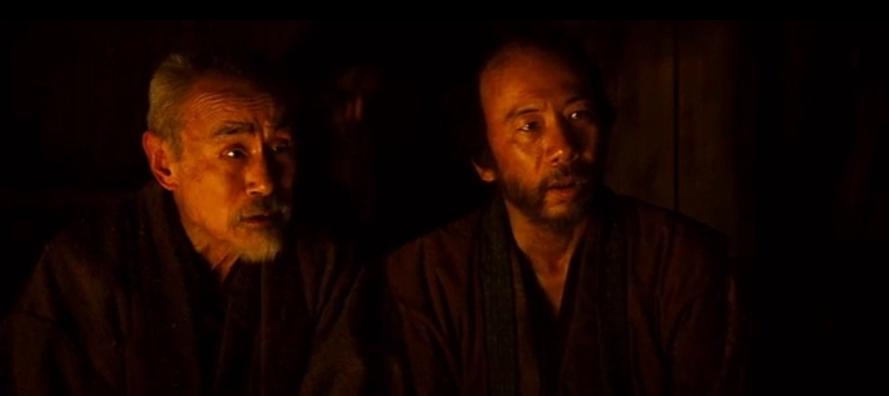
Although Silence may seem to be a story about an individual's journey, the story of Jesuit priest Sebastião Rodrigues, played brilliantly by Andrew Garfield,  as he attempts to spread Christianity in Japan while learning of the whereabouts of his former mentor, it is so much more than that. The film is built around Rodrigues, but through him we encounter so many different people within 17th century Japan. Two of the first Rodrigues, and his fellow priest Garupe (Adam Driver), encoutner are Mokichi and Ichizo played by Shinya Tsukamoto and Yoshi Oida. The two men are Japanese Christians with Ichizo having even been trained to give baptisms. Their performances are defined by an honesty in their very presence. Both Tsukamoto and Oida portray this desperate passion in the men in order to renew their faith once more. The two portray a direct uncompromising respect for the priests, which comes with this palatable attachment the villagers have to what they bring in to their lives.

What is important about both of their performances is that even within the intensity of that attachment the two directly show the appreciation that each man has for the priests, which directly connects to their faith. The desperation is real but within it Oida and Tsukamoto reveal what it is that Mokichi and Ichizo are granted from it. When in direct interaction, of their faith, they portray the solace they receive from it. Their joy is overwhelming at times and in that they directly suggest not only what they find in their beliefs but also what it grants them. All in this though we are given an insight into the very peculiar status of the men's beliefs considering that they are technically praying in secret. This is found in their performances that convey this terrible attempt to keep hidden something they hold dear. That intense fear they both bring when they believe they may loses the priests, it is not that either of them are holding onto the men, but rather the idea of the men being such powerful tools of their belief.

Their test of faith comes though when the Japanese inquisition visits their village, and again both actors excel in these scenes. There is real power in the terror that grace their face as they attempt to stand in front of the inquisition. It is decided that both Mokichi and Ichizo must be hostages, but they must find two more. Oida has a terrific scene where he reveals the pure unadulterated faith in Ichizo as he pleads with another to join them in their sacrifice. Here in these scene there such a poignancy in depicting both men attempting to deal with their own struggle to abandon their faith in order to save themselves. Both are exceptional in the moment where Rodrigues grants them the permission to trample the image of Christ they will be presented with. Rodrigues's own statement is given understanding through the sheer horror that Tsukamoto portrays as he asks what to do, and Oida is equally effective as he conveys Ichizo's surprise at the advice. The two fail though to apostatize to the inquisitions requirement, they do trample the image Christ but without certainty. Again both of the performances are essential in these moments as silently they given the terrible struggle in both men, and allude to their belief. The men are sentenced to death and slowly executed by the tide while placed upon wooden crosses. This is Tsukamoto's scene and he is heart wrenching throughout the scene. As he reveals the man's slow emotional death in painful detail. What makes it so moving though is that Tsukamoto depicts still that solace in the man's eyes as he says a pray for his friend when Ichizo dies, and then later when he sings a hymn as he tries to hold onto life or perhaps ease his death. Both actors give very strong performances as they so effectively, and importantly grant a face to the Japanese Christians and their struggle. Their deaths are not meaningless, as they continue to haunt long after their departure.
Tadanobu Asano and Issey Ogata did not receive an Oscar nomination for portraying The Interpreter and the inquisitor Inoue Masashige respectively in Silence.

The lead persecutor of Christians in Japan we actually meet relatively early on as the Japanese inquisition first visits the Christian villagers. Ogata appears but does not speak for some time. In these scenes though we do get a glimpse into his rather brilliant approach to the part. As he's riding through the village he does not stare down at the villagers with hate, but actually a rather pleasant smile. Ogata's approach is not to present Inoue as this sinister villain instead playing the role kind of like a kooky old grandfather. The amazing part of it is how well he pulls it off. He's unassuming as we see him yet there is just something so interesting about the old man who rides with the inquisition. Everything about Ogata's demeanor is kind of something else, and again brilliantly so. The way he squints his eyes, his hunch, and especially that almost sweet? voice that he does, grants a most unique presence within the film to say the least. He gives though the age of the character, but also this man of power who essentially behaves in a way that only a man with his power could behave.

A shame about a transformative performance like this is it is not one that can be readily appreciated, though Ogata was the only supporting actor from the ensemble recognized anywhere to begin with, but if one actually goes to see the man in an interview one can see that he truly went out on a limb with his performance here. It absolutely works though and makes him the all the more effective as a villain. Ogata does not really speak for over an hour into the film, even though we see him before that point, after Rodrigues has been captured with a group of Japanese Christians. He speaks and we get a glimpse of Inoue's most unusual method of defeating his enemies. In that Ogata delivers his initial words against the Christians as though he is merely pleasantly giving them a bit of advice. This even continues as he opens up to Rodrigues, but this changes when Rodrigues makes it clear that he will not be an easily defeated priest. Ogata's switch is perfect, as well as rather menacing, revealing a more exact hatred, when he makes his frustrations known directly to him. I especially admire his venomous delivery of "The price of you glory is their suffering" suggesting a less gentle man when he sees that this priest will take some time.

We are soon introduced to the second persecutor with considerable emphasis within film which is the man only named as the interpreter. He is the man who most often interacts with Rodrigues as they attempt to get him to apostatize. Although the interpreter fulfills the requirements of his name that is not his only purpose. Tadanobu Asano's work is yet another striking turn in this film. Asano again twists the part in rather compelling way. He does not scream at Rodrigues, but he rather, well what's the best word to describe, yes I know, he trolls him. Asano delivers this palatable disdain in everything about his performance that is so effective in offering this curious atypical yet still sinister presence. What's so great about Asano's approach is just how much passive aggression he brings to the part, though he portrays all of the interpreters hatred as very much a natural state of being that he's quite comfortable with. Asano is not one note though even quite effectively delivering a real passion as he states what the value in Buddism is. Asano delivers this straight to even allow one to potentially agree with the interpreter, of course then Asano is so incisive as he turns this honest defense into a vicious attack against Rodrigues's own beliefs.

Now the reason I discussed Ogata and Asano together, besides that their characters are in supportive of each other in the same task, is that they are also kind of hilarious. Despite being the most identifiable villains for the film, they are also the source of the most light hearted moments in the film. What is astonishing is that it somehow feels not only natural it only elevates the film's strengths all the more. A great deal of the credit for this needs to go to both actors. Asano's comedic moments come from that general sense of superiority he grants the Interpreter. Asano though is suddenly funny when he is funny, particularly his timing when Rodrigues asks if their plan is to let their body betray him and he instantly counters "Not at all" with such abrasive indifference. Ogata's very being is amusing particularly with the little business he goes in whether it is shooing a fly in his initial interrogation or his manner of calling or punishing those he needs when he's trying to straighten up. Both make the humor genuine, and fitting to their characters. In these instances Asano and Ogata reflect the attitudes of the men whose job it has become to inflict such punishments, and they're so comfortable in it that they can be rather blasé about it all. 

Ogata and Asano do not compromise their characters intentions though with those lighter moments. They are a natural part of their overarching characterizations of these inquisitors. When they become more direct in their technique both are brutally effective. Again one of the most notable sequences of the film is when Rodrigues is forced to watch Father Garupe drown in a failed attempt to save some of the Japanese Christians. Asano is bone chilling in the scene as he offers such exact remarks towards Rodrigues throughout it. There is no sympathy just the intention to break the man with his cruel words that are made all the crueler through Asano's direct almost unemotional delivery. Ogata excels in crafting this most unusual man's way of destroying those who oppose him, and he manages to make something so menacing out of only usually implying what he's capable of. We actually don't really ever hear him order someone to be directly executed or tortured. Ogata gives us that sly smile and even a warmth as he speaks to Rodrigues about a story regarding concubines, even offering this shyness as he ponders if he should regale such a story to a celibate priest. When the story is revealed to be a metaphor for the other countries interfering in Japan, there is this darker shade in his eyes, which only worsens when Rodrigues's resolve is not lost. Ogata in those moments suggests the man responsible for the torture and murders of so many. Ogata though in the end presents a man who has come to attempt to convert rather than kill, though that may involve the killing of others. I feel this is best represented in Ogata's final scene where he actually comforts the defeated Rodrigues, and delivers his message as "hey you tried your best but it was all against you". Ogata gives a great performance as he not only offers such a unique character, that you feel has quite the life outside of the frame we view him in. Asano and Ogata realize the effectiveness of the inquisition. They present men who have become so very comfortable and efficient in their task, making it almost second nature to them, even though it involves so many horrible deeds.
(Asano)
(Ogata)
Liam Neeson did not receive an Oscar nomination for portraying Father Cristovao Ferreira in Silence.

Liam Neeson plays almost the Colonel Kurtz for the journey, in that he's technically the end goal of the missionaries. Unlike Marlon Brando in Apocalypse Now we actually do see Liam Neeson before the end. He opens the film as we witness part of Father Ferreira's, who lead the Christian mission in Japan, downfall as he watches his fellow priests being slowly tortured. Neeson is devastating in these glimpses offering a man worn away by his anguish. Neeson in the flashbacks later as well shows a man who has been through hell and is almost hollow in the way his strength has been purged from him. We do not see Ferreira again for over two hours when he finally appears to be a final weapon of sorts by the inquisition in order to get Rodrigues to apostatize, as Ferreira had done. Ferreira is mentioned several times before his reappearance, as the inquisition name him as a great example for all others as he has not only given up his faith but also lives as a Japanese. There is this buildup to the man, again not unlike Kurtz in Apocalypse Now, so Neeson needs to live up to this.

Neeson does live up to his character's reputation but not in the way you may think. Neeson's work here is fascinating as seems aware of his own screen persona. Neeson is of course no way a stranger to playing mentors, on the contrary it is one of his specialties. Neeson though in those roles though is always known for the confidence and command he brings to them. That is not what Neeson brings here and he makes a tremendous impact from his first scene where Ferreira sits across from Rodrigues to speak. Neeson is notable as he gives us this broken man. Neeson realizes what was done to Ferreier in every aspect of his performance. Neeson shares almost no eye contact with Garfield throughout the scene, almost like beat dog, showing this shame as Ferreira knows how he must look to his old student. Neeson inflicts this hesitation in his early greetings, this stops in speech reflecting this overwhelming sadness of the man. When he asks "do I seem so different" to Rodrigues, there is such distress in his voice, as Neeson shows a man who honestly knows the answer already. When he speaks of being happy to finally be of use, Neeson reveals a man writhing in pain just below his skin, torn apart by just what he has become.

Neeson shows that Ferreira only can come out of this depression when he attempts to speak Rodrigues into following his example. Neeson portrays this in no way as Ferreira having become some true believer for the Japanese's  cause. There is something as painful as his depressed state as he attempt to argue for Rodrigues to denounce his faith himself. There is a passion that Neeson grants the words but a cynical passion. Neeson plays this as a man grasping onto his olds doubts to be able to speak these words. Neeson perhaps gives us the most direct Ferreira as he attempts to convince Rodrigues that the Japanese never understood Christianity to begin with. Neeson again does not deliver this as some man whose made a revelation, it is rather a man writhing in his own torments. There is no hope left in Neeson's voice or eyes in his miserable teachings towards his old student. Neeson's work is incredibly striking and oddly enough soulful as he depicts a man who has had his own faith ripped from him. As powerful as Neeson's performance is up until he helps to "break" Rodrigues, one of the most affecting moments though is in his final quiet scene as he and Rodrigues go about their duties as pawns of the anti-christian Japanese. Ferreira states that only "Our Lord" can judge their minds, and in that brief moment Neeson alludes to the man and teacher Ferreira once was, and that his faith was perhaps still within him. This is an outstanding performance by Liam Neeson as it is such compelling subversion of his usual presence, and leaves such considerable imprint on the film despite his very brief screentime. 
Yosuke Kubozuka did not receive an Oscar nomination for portraying Kichijiro in Silence.

The final performance I write about comes through the character who is probably given the second greatest importance within the narrative, behind Rodrigues of course. Kichijiro we are introduced to outside of Japan as he is living as an expatriate in Macau. Although living might be an overstatement as the two priests are shown the man who is little more than drunken wreck, with the only reason why he's the best man for the job of guide is because he's the only man for the job. Kubozuka does not give a quiet performance, but nor should he. The man after all from his first scene is shown to be a druken fool. Kubozuka excels in being just that as he yells nonsensically against going with them. Kichijiro needs to be an obvious mess to anyone who sees him, and Kubozuka brings that. He makes him a bit of a joke, which again is an intentional realization of the character who is a bit of joke to everyone who speaks of him. There is a moment though that Kubozuka effectively undercuts this slightly when he lashes out at being called a Christian. His lament that Christians die could merely be the ramblings of an idiotic drunk, but Kubozuka infuses it with a bit more pathos than that even if only lasts for a moment.

Kichijiro does in the end take the priests over to Japan where we eventually learn the cause of the man's state. The revelation is that Kichijiro is not only indeed a Christian but also his whole family was murdered by the Japanese inquisition. Kichijiro only survived himself by apostatizing yet he still saw his family die. We are given a brief insight into the former man as we flashback to see his family being massacred as he watched. Kubozuka's presence is different in that he stands not as the drunken fool, but a normal man. As the family is massacred though Kubozuka's reaction is truly haunting as it echoes the pain the man is suffering, a pain that could bring him to the state the Fathers originally found him in. The scene gives sense to Kubozuka's performance which not of a drunken fool, but rather a man driven to madness due his grief. In the scene where Kichijiro tells Rodrigues his story Kubozuka is absolutely heartbreaking by revealing the real man beneath the wretch. He portrays so well the hint of hope in the man with such poignancy as he asks if there is a chance that God may forgive him.

When the inquisition arrives though Kubozuka shows that although we may have a greater understanding of the man, he's in no way recovered. Kubozuka instead portrays this rather problematic attachment that Kichijiro gains towards Rodrigues. Kubozuka depicts it as that same madness in the man, but now he has a method of trying to find some respite which is through looking towards Rodrigues for guidance and absolution. When the villagers asks for Kichijiro's help, as well as accuse him of wrongdoing, Kubozuka's reaction grants an insight into the man. He reacts in utter fear but his protests are all aimed right towards Rodrigues in attempt for him to escape from his personal demons somehow. Kichijiro is one of the few Japanese who consistently avoids being killed by his willingness to apostatize again and again. Kichijiro for the rest of the film ends up being a rather strange ghost of sorts, though very much alive, who follows around Rodrigues. Again Kubozuka's work offers an understanding to this behavior by portraying that attachment that is so strong to the priest. Kubozuka's terrific because he really is absolutely the wretch Kichijiro seems to be, only becoming more wretched when he apparently betrays Rodrigues to the authorities. There is even a slightly comic element in this as Kichijiro continues to appear no matter where Rodrigues goes in order to deliver his confession. Kubozuka's performance touches upon a humorous undercurrent yet that is only an aspect in his realization of the terrible pathetic state of the man. What's so remarkable about his work is his ability to infuse Kichijiro with that history, and that at all points he carries that very real pain that brought him to this point with a very real desperation in his attempts to find some solace. Kubozuka is the last of the prominent supporting actors to appear in the film as he acts as a servant to the now apostatized Rodrigues. Years have past and Kubozuka gives a slightly more put together Kichijiro, having been living a different life of sorts. Kichijiro still asks to have his confession heard and it is comic in a way yet also tragic because Kubozuka makes the intention of his wish to have his sins forgiven so honest. He's incredibly moving and Kubozuka also manages to give understanding to Kichijiro as a man, despite his pathetic state. He's never a caricature as Kubozuka delivers his own embodiment of man's journey to finding his own path in regards to his faith, that mirrors Rodrigues's own though Kichijiro's perhaps is a less noble one. 
Read More
Posted in 2016 Alternate Supporting, Issey Ogata, Liam Neeson, Shinya Tsukamoto, Tadanobu Asano, Yoshi Oida, Yosuke Kubozuka | No comments

Wednesday, 8 February 2017

Alternate Best Supporting Actor 2016

Posted on 17:00 by allenales
And the Nominees Were Not:

Stellan Skarsgård in Our Kind of Traitor

Damian Lewis in Our Kind of Traitor 

Sam Neill in Hunt For the Wilderpeople

Ben Foster in Hell or High Water

Alden Ehrenreich in Hail Caesar!

Ralph Ineson in The Witch 

Harvey Scrimshaw in The Witch

For Prediction purposes:

Skarsgård from Traitor

Ineson from the VVitch

 And they also were not:

Shinya Tsukamoto in Silence

Yoshi Oida in Silence 

Tadanobu Asano in Silence

Liam Neeson in Silence 

Issey Ogata in Silence

Yosuke Kubozuka in Silence

For prediction purposes:
 

Tsukamoto out of the villagers.  
Read More
Posted in 2016 Alternate Supporting, Alden Ehrenreich, Ben Foster, Damian Lewis, Harvey Scrimshaw, Issey Ogata, Liam Neeson, Ralph Ineson, Sam Neill, Shinya Tsuamoto, Stellan Skarsgard, Tadanobu Asano, Yosuke Kubozuka | No comments

Alternate Best Actor 2016: Results

Posted on 13:18 by allenales
5. Adam Driver in Paterson - I approach the keyboard to write the results of the year. I ponder if I chose Driver because he's the only actor from Silence I left off on the supporting shortlist. I continue to think and realize that this is a performance worth writing about.
4. Michael Keaton in The Founder - Keaton gives an entertaining performance as Ray Kroc but also manages to take his film to the darker places it needs to go in his revelation of the true nature of a cutthroat businessman.

Best Scene: Bathroom meeting.
3. Chris Pine in Hell or High - Chris Pine has an unassuming role yet gives a powerful portrayal of his character's motivations without being overshadowed by his more colorful co-stars.

Best Scene: Final scene.
2. Joel Edgerton in Loving - Edgerton gives a brilliant understated performance internalizing so effectively both the character's turmoil due to his hardship but also the love for his wife.

Best Scene: First meeting with Cohen.
1. Andrew Garfield in Silence - Good Predictions Calvin Law, and Robert MacFarlane. Due to only having five slots this may seem a weaker year, but that's in large pat because the Academy really did their job this year. It was a strong year for lead actor with Andrew Garfield giving the crowning achievement. He gives the most powerful performance of the year. It is an emotionally devastating performance to watch, but so much more in his profound realization of his character's unique journey of faith.

Best Scene: Garupe's test.
Overall Rank:
  1. Andrew Garfield in Silence
  2. Jeff Bridges in Hell or High Water
  3. Viggo Mortensen in Captain Fantastic
  4. Joel Edgerton in Loving
  5. Denzel Washington in Fences
  6. Ryan Gosling in La La Land
  7. Chris Pine in Hell or High Water
  8. Shahab Hosseini in The Salesman
  9. Casey Affleck in Manchester by the Sea
  10. Andrew Garfield in Hacksaw Ridge
  11. Michael Keaton in The Founder 
  12. Adam Driver in Paterson
  13. Song Kang-ho in The Age of Shadows
  14. Tom Hanks in Sully
  15. Russell Crowe in The Nice Guys
  16. Ryan Gosling in The Nice Guys
  17. Robert Downey Jr. Captain America: Civil War 
  18. Ryan Reynolds in Deadpool 
  19. Daniel Radcliffe in Swiss Army Man
  20. Paul Dano in Swiss Army Man 
  21. Trevante Rhodes in Moonlight
  22. Ethan Hawke in Born to Be Blue
  23. Julian Dennison in Hunt for the Wilderpeople
  24. Lewis MacDougall in A Monster Calls 
  25. Ashton Sanders in Moonlight 
  26. Anton Yelchin in Green Room
  27. Jesse Plemons in Other People
  28. Benedict Cumberbatch in Dr. Strange 
  29. Jake Gyllenhaal in Demolition
  30. Chris Evans in Captain America: Civil War 
  31. Jeremy Irons in The Man Who Knew Infinity
  32. Jonah Hill in War Dogs
  33. Dan Fogler in Fantastic Beasts and Where to Find Them 
  34. Bryan Cranston in The Infiltrator
  35. Hugh Grant in Florence Foster Jenkins
  36. Cillian Murphy in Anthropoid
  37. Mark Rylance in The BFG
  38. Dave Johns in I, Daniel Blake
  39. Michael Fassbender in The Light Between Oceans
  40. Sunny Pawar in Lion
  41. Dev Patel in Lion
  42. Gong Yoo in Train to Busan
  43. Mel Gibson in Blood Father 
  44. Josh Brolin in Hail Caesar! 
  45. Gong Yoo in The Age of Shadows
  46. Eddie Redmayne in Fantastic Beasts and Where to Find Them 
  47. Miles Teller in Bleed For This
  48. David Oyelowo in The Queen of Katwe
  49. Diego Luna in Rogue One
  50. Dwayne Johnson in Moana
  51. Ferdia Walsh-Peelo in Sing Street 
  52. Alex Hibbert in Moonlight 
  53. Matthew McConaughey in Free State of Jones
  54. Michael Shannon in Elvis & Nixon
  55. Joseph Gordon-Levitt in Snowden
  56. Denzel Washington in The Magnificent Seven 
  57. Mark Wahlberg in Patriots Day 
  58. Casey Affleck in The Finest Hours
  59. Jason Bateman in Zootopia
  60. Ben Affleck in The Accountant
  61. Stephen Lang in Don't Breathe
  62. Miles Teller in War Dogs
  63. Michael Shannon in Midnight Special
  64. Peter Simonischek in Toni Erdmann 
  65. Matthew McConaughey in Gold
  66. Keegan-Michael Key in Keanu 
  67. Lucas Jade Zumann in 20th Century Women
  68. Chris Pine in Star Trek: Beyond
  69. Ben Affleck in Live by Night 
  70. John Krasinski in 13 Hours
  71. Casey Affleck in Triple Nine 
  72. James Badge Dale in 13 Hours
  73. Mark Wahlberg in Deepwater Horizon 
  74. Jamie Dornan in Anthropoid 
  75. Jack Black in Kung Fu Panda 3
  76. Art Parkinson in Kubo and the Two Strings
  77. Jordan Peele in Keanu 
  78. Dev Patel in The Man Who Knew Infinity
  79. Ben Affleck in Batman v Superman: Dawn of Justice
  80. Jesse Eisenberg in Cafe Society
  81. Kwak Do-won in The Wailing
  82. Max Records in I am Not a Serial Killer
  83. Ewan McGregor in Our Kind of Traitor
  84. Chris Pratt in Passengers 
  85. Jaeden Lieberher in Midnight Special 
  86. Logan Lerman in Indignation
  87. Chris Pine in The Finest Hours
  88. Neel Sethi in The Jungle Book
  89. Henry Cavill in Batman v Superman: Dawn of Justice
  90. Brad Pitt in Allied
  91. Jake Gyllenhaal in Nocturnal Animals
  92. Will Smith in Collateral Beauty
Read More
Posted in 2016 Alternate Best Actor, Adam Driver, Andrew Garfield, Chris Pine, Joel Edgerton, Michael Keaton | No comments

Alternate Best Actor 2016: Andrew Garfield in Silence

Posted on 12:07 by allenales
Andrew Garfield did not receive an Oscar nomination for portraying Father Sebastião Rodrigues in Silence.

Silence is a masterful film about two Jesuit priests who travel to Japan to attempt to spread Christianity and discover the fate of their mentor.

Andrew Garfield was unable to be nominated for his performance in this film since he was already nominated for Hacksaw Ridge. Both films have at the very least portions that take place in Japan and Christianity plays a large role in terms of the motivations of each man he portrays. In Hacksaw Ridge though we are given a man whose faith is an unquestionable facet, and his story is more about conviction to those firm beliefs. In Silence the focus is more closely on the faith itself. We are introduced to the Catholic Father Rodrigues, as he and Father Garupe (Adam Driver), as they learn that their former mentor, Father Ferreira (Liam Neeson), has apparently surrendered his mission in Japan, and denounced God. The two decide to go to Japan themselves in order reestablish Christianity within the country and find out the truth in regards to Ferreira. Prior to 2015, Andrew Garfield was an actor whose performances I found myself strangely detached to yet with each new performance I've found him to be an actor with such an eloquent understanding for tone and character. Garfield here embodies the man that is Rodrigues, I do not mean he merely provides a consistent accent, which he does, but that is only a minor facet of this process.

Garfield's work is that of more than one would ever assume. In the opening moments Garfield expresses the devotion of a faithful priest in the service of God. He speaks of his support for the mission to discover their lost mentor, and for the support of Catholicism itself. There is no simplicity in this conviction, as truthful as it is, through Garfield's work. Throughout the film we hear Rodrigues's narration and his thoughts. These moments are not to be forgotten and are not a footnote to this performance. Garfield speaks of the "vision" of Christ's portrait by El Greco, it is a calm astute belief not zealotry. We hear the years of a devotion to God, that is defined by comfort not an overt passion. In order to travel to Japan they find a guide in an alcoholic Japanese Fisherman in Macau by the name of Kichijiro (Yosuke Kubozuka), Rodrigues watches the man whose wretched nature seems obvious, yet in this early on Garfield provides only an understanding and empathy in the eyes of Rodrigues for a man who appears to be "the least of his brothers". Garfield offers no judgment in Rodrigues towards this man, only an open heart, as his very physical manner is that of welcoming guide for anyone who may be lost.

The priests successfully reach Japan and discover two villages filled with loyal Christians who are more than appreciative to be granted two new priests to help practice their faith once more. These scenes have an incredible, subtle, beauty to them by revealing how genuine the solace the villagers are granted through their interactions with the priests. In Garfield's own physical and verbal interactions there is only a warmth, a real honesty in his strive to support the Japanese Christians. Garfield's work is remarkable by creating such a lack vanity in his portrayal of Rodrigues's own reflections upon this experience. The joy expressed is a powerful understated quality in Garfield portrayal where Rodrigues's own faith seems only to be rewarded, by that solace the peasants feel by his mere presence. There is a specific lack of indulgence within this though as Garfield expresses an equal understanding of the hardship of their lives. During this time Rodrigues is also made aware of Kichijiro's own tragic story, where his whole family was slaughtered and only he survived by renouncing God. Rodrigues acceptance of this confession, is made earnest in Garfield's performance which reflects a wish to offer comfort yet once again has empathy for his terrible suffering.

Eventually this pleasant time is ended when the Japanese inquisition visits the town in order to find the priests and purge the Christians from the land. They choose hostages to pay for these "crimes". Rodrigues advises the hostages to trample on the Fumie (image of Christ). Garfield speaks the words "Trample, trample" not lightly. It is with a pained conviction that Garfield gives, presenting the attempt in Rodrigues to allow the men to live, assuage their conscience even while he struggles with his own by giving this instruction. The hostages, except one, Kichijiro, fail to apostatize to the inquisitor's satisfaction, leaving them to be slowly executed by being placed on wooden crosses within the ocean. Rodrigues and Garupe can but watch at a distance as it unfolds in front of them. Garfield's work is very poignant in the sequence as it is more than even reflecting the distress of witnessing the men's slow death. Although that is shown there is even more as the initial conviction of the man begins to waver. Garfield conveys the confusion of this development as he attempts to ponder the suffering with an ever loving God. At the end of the execution Garfield has shown Rodrigues own loss of certainty through only his soft narration and scarce reactions.

Rodrigues and Garupe separate for their safety leaving Rodrigues to trek alone in an attempt to continue the mission. Garfield is exceptional in revealing the difficult state Rodrigues is in, experiencing almost his own Gethsemane as he wanders attempting to find direction. Garfield reveals a madness of this as Rodrigues grapples with now a palatable doubt. Garfield presents a harrowing vision into Rodrigues's mind as a man who is truly lost, finding his only companion to be, Kichijiro, a man who appears to be without a single conviction. Garfield earns the almost venomous description Rodrigues grants to the man, suggesting Rodrigues at his lowest point still distraught over all that he has witnessed. His broken state reaches a tipping point as he attempts to find water, and this time literally sees a vision of El Greco's Christ in his own reflection. Garfield is rather amazing in the scene by throwing himself into the insanity of Rodrigues in the moment, as he is unable to contemplate the meaning. Shortly afterwards he is caught by the Japanese inquisitors, having been betrayed by Kichijiro, and placed with a group of Japanese Christian prisoners. It is here that Garfield crafts a fascinating juxtaposition between what Rodrigues presents outwardly, and what is found internally.

Initially Rodrigues scolds the Christians over their calmness given the situation they are in, Garfield expressing still that madness stemming from his doubts. When one of the young Christians though offers words of comfort while turning to Rodrigues for assurance, Garfield is exceptional in the way he is able to realize this switch in Rodrigues in a moment. The change is not a true change, he offers an attempt of bringing that sort of guidance he had before. It isn't quite the same though as Garfield expresses Rodrigues's concern still for the people, yet he no longer has the same convictions himself. Rodrigues becomes a target of sorts by the inquisitor, who intends to have him apostatize in order to be an example for all the remaining Japanese Christians. Garfield's performance manages to find this strange dichotomy as Rodrigues, because of the inquisitor's plan, becomes set on becoming an example of conviction. Garfield's work is outstanding as he is able to provide these two mindsets outwardly and internally in tandem. As Garfield offers the spirit of a righteous man standing for his beliefs as he positioned in front of one challenge after another, meanwhile given time to look inwardly while true convictions are fading.

The Japanese attempt to break Rodrigues through a series of horrible acts. There is one unforgettable scene where Rodrigues is presented with a captured father Garupe who is given his own chance to apostatize to save the Christians, but instead chooses to attempt to physically save them leading to his own death. Garfield gives one of the most harrowing depictions of anguish you'll see on screen as he struggles to cry out to Garupe but is held back by his captors. Garfield is incredible in the moment yet what makes this leave the greater impact, is the way he effectively depicts Rodrigues take in every violent act. They do phase him then they are gone, Garfield gives us a man haunted by every death. He's incredible as he captures the sheer intensity of such torture in his very being. There is no point lost in this portrayal of Rodrigues, we understand every moment both as he is face to face with his persecutors and as he is speaking within his own soul. One of the final attempts to break Rodrigues comes with being presented with father Ferriera a broken man. Garfield is heartbreaking as he begins to merge the internal and the external as argues with his own mentor. The feelings of betrayal are palatable as is his own terrible distress fitting as the very man who helped teach him the faith now wishes for him to abandon it.

Silence is a masterpiece. Martin Scorsese directs the film aware of the inherit strength of the story. As with his work on The Wolf Wall Street, where he did not tell these men were bad he rather showed them in their natural despicable behavior, Scorsese does not hold your hand through this story. He allows one to experience it for themselves. This approach makes Andrew Garfield's work paramount to the film's success. Rodrigues struggle must be through Garfield, and Garfield must be the one to realize through his performance the most daring finalization of his journey. We are given in the end a man who makes not the sacrifice you'd expect, as Rodrigues does tread on the Fumie, but it is not as the act one would believe to be. Garfield grants the emotional weight in the moment but it is not the desperate act of a broken man, as it may have been for Ferriera when he did the same. There is pain but so much more as Garfield embodies this man who closer with God than ever while technically refuting him. This journey needs to be understood for the film to be successful. Garfield's performance is a powerful performance in terms of sheer emotion. What makes it extraordinary is, again, is his embodiment of this man. His portrayal goes beyond any simplifications of martyrdom, to offer a truly profound experience of man finding his faith through silence.
Read More
Posted in 2016 Alternate Best Actor, Andrew Garfield | No comments

Tuesday, 7 February 2017

Alternate Best Actor 2016: Michael Keaton in The Founder

Posted on 13:06 by allenales
Michael Keaton did not receive an Oscar nomination for portraying Ray Kroc in The Founder.

The Founder tells the story of the foundation of McDonalds. The film isn't bad but it is a little weird because director John Lee Hancock doesn't seem to understand the nature of the story.

John Lee Hancock oddly directs with the same old bag of tricks that he used in his earlier films like The Blind Side and Saving Mr. Banks. There's no cynicism to his work, in fact there only seems to be optimism which is a strange fit to even the screenplay itself which plays out more like the Social Network than The Pursuit of Happyness. As bizarre as it is, Hancock and a few of the minor actors in the film are the only ones who seem lost in regards to what the tone should be. The man who seems to understand it the best is Michael Keaton.Technically speaking though in the early scenes of the film we are given a Ray Kroc who might be a bit more suitable to the type of character that John Lee Hancock likes to follow. Kroc in the opening scenes is just a past his prime salesman still trying to hock goods, in this case milkshake mixers. Keaton doesn't quite make Kroc Shelley Levine from Glengarry Glen Ross, but he does gives us a salesman whose beginning to show his rust. Keaton brings still that idea of the energy needed for a salesman, even when he is failing to make his sales, but he grants the right sense that the pitch has been delivered a few too many times.

Keaton makes Kroc a washed up salesman but a likable enough washed up salesman. Keaton brings that Keatoness that only Keaton could possibly bring which has a definite charm to it, and is a great fit for Ray Kroc. Kroc comes across something new by discovering the innovative fast food design of McDonalds, owned by the McDonald brothers Mac (John Carroll Lynch), and Dick (Nick Offerman). They give them their history, of failure yet eventual success. Keaton's terrific as he brings out this certain spark back to Kroc, possibly from his prime, as he looks upon the brother's successful idea. What's special about what Keaton does though is even in these early scenes there is something a little devious in his eyes. As he pitches the idea of McDonalds as a franchise to the brothers, he pitches it as basically something for America. Keaton makes the passion in Kroc's voice real and even makes it rather endearing yet not wholly truthful. Keaton shows just enough of it to be act in the way he portrays Kroc's glances at those golden arches. His eyes are not filled with hope for all of three of them to achieve their dream, rather a selfish desire only for himself.

It is easy enough to sympathize with Kroc early on still as Keaton so effectively realizes the sheer exuberance in the man as he goes about his attempt to begin the franchise. He underlines this though with a bit less certainty in Kroc with every initial failure. Keaton uses his few scenes with Kroc's first wife Ethel (Laura Dern) particularly well. In these scenes Keaton gives us an actual vulnerability in Kroc as he reveals the desperation in his ambition actually. When he says that "enough" will never be enough, Keaton does not deliver it as inspirational, rather he undercuts it with a certain distress in Kroc's voice. Now the following scenes probably wouldn't work with so many actors in the role. They are just Kroc at first working out the various kinks in the plan, while dealing with the frustrations related to the McDonald brothers who take a long time to make any decision. When Kroc is just "hoofing" it, dealing with some of the most minute details of the business, Keaton manages to make these scenes work better than they should because he's such a naturally entertaining and engaging presence, even when doing something such as yelling at an investor for using lettuce on the burgers.

We are given pure premium Keaton though as the franchises take off and Kroc only gets better at his task. Keaton is brilliant as the pure salesman selling more than just the idea to the investors, selling a dream instead. Keaton brings the grandeur needed in it all as he sells it all, and makes the success convincing just through the magnificent of his pitch. Keaton even maintains some real sympathy for Kroc by so bluntly still portraying the initial frustrations with the brothers who delay him at every turn. There is a change though as Kroc decides to take things into his own hands by essentially stealing the company out from underneath the brothers, and becoming the "true" founder of McDonalds. This is kind of where we have this certain conflict between Keaton and the film itself. In that Keaton knows where the story needs to go, but the film seems a little unsure of itself. Keaton is not afraid though to take the darker turn as he has Kroc reveal his true colors. The thing is Keaton never hid the seeds of this, having the devious quality from his first sale, but he takes it to the next level as Kroc goes about removing any obstacles in his path.

Keaton just relishes in the metaphorical kill as he takes any loophole he can to remove the McDonalds' claim. I have to admit my particular affection for his callous delivery of "Contracts are like hearts, they're meant to broken". Kroc's no prisoners attitude though extends even to his personal life as he decides to drop his wife for another. Although it is an extremely brief scene, as though the film is in some way timid towards the subject matter, Keaton is not timid as he so coldly delivers Kroc's demand for a divorce. Keaton inflicts within it no shame, just a heartless sentiment of a man who intends on getting whatever he wants no matter what. Keaton simply excels in the final moments of the film as Kroc secures every last part of McDonalds for himself. He's outstanding in the scene as he bothers with the good old salesman just one more time, offering such sincerity as he says he'll honor their bargain with a handshake. Keaton compliments this perfectly with the perfect smug satisfaction exudes a scene later when he tells Dick McDonald why he stole their idea in this exact way. Keaton's performance doesn't just elevate the film it gives the proper meaning to it. Keaton never sugarcoats his Ray Kroc, he goes about giving an honest depiction of a businessman who will do whatever it takes to get on top.  By taking the darker turn he needs to take with his performance Keaton shows that this isn't an inspirational portrait of a man achieving his dream, it's the story of a man stealing someone else's dream and making it his own.
Read More
Posted in 2016 Alternate Best Actor, Michael Keaton | No comments

Monday, 6 February 2017

Alternate Best Actor 2016: Joel Edgerton in Loving

Posted on 17:30 by allenales
Joel Edgerton did not receive an Oscar nomination, despite being nominated for a Golden Globe, for portraying Richard Loving in Loving.

Loving tells the true story of an interracial couple in the 60's whose marriage would eventually challenge the law against it in the supreme court. Interestingly enough the film is best just when it depicts the people living their life, although I will say this is in part due to whatever Nick Kroll is doing as the Loving's attorney, Bernie Cohen. If director Jeff Nichols needed a Jeff Goldblum surrogate again why not use Adam Driver as he did for Midnight Special, but I digress.

Joel Edgerton is an actor who has flown under the radar for awhile even though his profile has gradually risen with every year. This seems to have happened once again with this film, as he did receive just a few notices for his work though his co-star Ruth Negga, as Richard's wife Mildred, was Oscar nominated for her work. The funny thing about that is though out of all the actors who kind of where in the realm of being potentially nominated this year, Joel Edgerton's work is perhaps the most transformative out of all of them, the problem being it is the kind of transformative work that you need to be a little more known to begin with for most to notice. To explain, Edgerton's work here is a far cry from his performances as the sleazy FBI agent in Black Mass, or the creepy loner in his own directorial debut, The Gift. Richard is nothing like those men, and here Edgerton seeks to embody a different kind of man, far beyond merely his blond hair and crew cut.

Edgerton's work is technically speaking extremely mannered, in his attempt to fully embody this very particular sort of man. This of course relates to his consistent and authentic Virginia accent, but that's only part of it. Edgerton speaks with a low rumble, speaking as a man who only really wants those closest to him to hear him. Even the deliver itself reflects this certain idea in Edgerton's particular contortion of his mouth, fitting to a man who mostly doesn't speak. His physical approach conveys this natural reluctance towards the spotlight, a shyness to ever seek attention. What is most remarkable in all of this is how natural Edgerton makes it all feel. The way he portrays Richard is forgotten just a few minutes into the film as you quickly accept that you just merely are watching Richard. Again it is technically speaking extremely mannered turn yet Edgerton does not make seem fussy at all, strangely enough it seems decidedly non-fussy. Edgerton through his approach never seeks attention which in turn fits this man who never desires attention.

A remarkable aspect of the story is that the Lovings were not what would be considered radical at the time, and in fact didn't really seem to be all that politically minded. Their story is far simpler in nature as the two merely came from the same county of working class people who just didn't really distinguish by race. A central aspect of Edgerton's performance is this idea. He presents Richard's love for Mildred as about as pure as something can be. It is rather fascinating what Edgerton does here in that his depiction of this is so genuine in its simplicity that he even creates an understanding that the idea their marriage would get them in any real trouble never even crossed his mine. In one of Edgerton's earliest scenes we see this as Richard shows Mildred where he is going to build their future home, and where he pledges to marry her. There is something ethereal in the moment, yet it still feels entirely of this earth. Although Richard's words are minor, and Edgerton's delivery unassuming you'll find few declarations of affection that feel as honest as the one in this scene.

Looking at the film is fascinating in that the film itself seems a bit like the Lovings. In that the Lovings just wanted to just be left alone to live their life, happily married in Virginia, and the film seems like it wants most to stay just with these two people doing just that. What interferes with this though are the authorities of Virginia who repeatedly emerge in order to keep the two separated from each other. This is even handled in a fairly low key fashion, even having the racist Sheriff be relatively calm figure all things considered. Nevertheless the two still are arrested for their marriage and presented at trial. Even in the court the two basically let their lawyer do the talking but that is not to say they have nothing to say particularly Richard who only says a scant few words, and performance wise Edgerton quite frankly almost makes Chris Pine in Hell or High Water look like Denzel Washington in Fences times with just how understated he is.

Edgerton does not seem to need words because of how he embodies Richard's personality. In the first trial sequence, where Richard also is not allowed to personally bail his wife out of prison, we see Richard go from one authority to another in order to be reunited with his wife. Edgerton is outstanding in the way he creates the sense of the emotional intensity in Richard without raising his voice. In just the most slightly halted breath, a turn of his brown, and crook in his mouth you can sense the man holding back so much. There is incredible moment where Richard waits outside after a non-fortuitous trial. The distress in Edgerton is so powerful in the scene as he realizes it just in his eyes, and his bones as he is merely just smoking a cigarette. Richard stays together, but Edgerton wears the turmoil in his very being. Richard throughout his and his wife's troubles keeps the idea that above all he just wants to be left to live his life. One of my favorite moments in the film is when Richard explains this fact to Cohen, as he just asks if can just tell the judge that the "won't bother anyone". This could seem silly in its naivety but Edgerton makes it heartbreaking by making this simplicity of the demand so painfully honest.

Again though I think the film thrives most just letting us see the Lovings as they are, and Edgerton thrives within this as well. He's still quite tight lipped, but that is never to say he's not expressive. Something I love is his chemistry with Ruth Negga, which interestingly outside of their initial scene together we do not hear the two of them vocalize their love directly to one another all that often. Their love though is never in question, and not just because of those earlier scenes. I love the physical way in which Edgerton portrays his true devotion to his wife. There is such a comfort in the way they touch other, and interact. They just merely seem right in the others' embrace, they do not even need to say they love one another to each other because it is already evident without a word. Richard is a man who is more or less a constant in terms of personality. The major change in the man is just the frustrations in dealing with law against his marriage. There is something I love about Edgerton work that he realizes in this. In that throughout he does convey the underlying fear in Richard as he watches his family knowing there is a danger, but also the unease as the spotlight is shown on them. Edgerton brings the right difficulty in Richard just to withstand the press and even his own lawyers, reflective of a man who only ever just wanted to live out in the country with his family. When it is all over though, and he finally hears that a court has found in his favor, Edgerton reacts with just a simple smile. That's all he needs though, and it is such a beautiful moment since as the joy feels so genuine to this man Edgerton has shown us. This is a brilliant subtle performance by Joel Edgerton as he realizes this man and his struggle with such eloquence and a true poignancy.
Read More
Posted in 2016 Alternate Best Actor, Joel Edgerton | No comments
Newer Posts Older Posts Home
Subscribe to: Posts (Atom)

Popular Posts

  • Alternate Best Actor 1993: Leslie Cheung in Farewell My Concubine
    Leslie Cheung did not receive an Oscar nomination for portraying Cheng Dieyi in Farewell My Concubine. Farewell my Concubine is an intriguin...
  • Alternate Best Supporting Actor 2003: Bernie Mac and John Ritter in Bad Santa
    Bernie Mac and John Ritter did not receive an Oscar nominations for portraying Gin Slagel and Bob Chipeska respectively in Bad Santa. Sadly ...
  • Best Actor 2016: Ryan Gosling in La La Land
    Ryan Gosling received his second Oscar nomination for portraying Sebastian in La La Land. La La Land is a wonderful musical about the romanc...
  • Alternate Best Actor 2012: Matthias Schoenaerts in Rust and Bone
    Matthias Schoenaerts did not receive an Oscar nomination for portraying Ali in Rust and Bone. Rust and Bone is an effective film which follo...
  • Alternate Best Actor 1992: Benoît Poelvoorde in Man Bites Dog
    Benoît Poelvoorde did not receive an Oscar nomination for portraying Ben in Man Bites Dog. Man Bites Dog is a faux documentary that goes alo...
  • Alternate Best Supporting Actor 2012: Nawazuddin Siddiqui in Gangs of Wasseypur Part 2
    Nawazuddin Siddiqui did not receive an Oscar nomination for portraying Faizal Khan iin Gangs of Wasseypur Part 2. Gangs of Wasseypur Part 2 ...
  • Alternate Best Supporting Actor 1984: Kenneth McMillan in Dune & The Pope of Greenwich Village and Sting in Dune
    Kenneth McMillan nor Sting received an Oscar nomination for portraying Baron Vladimir Harkonnen and Feyd-Rautha respectively in Dune. Well y...
  • Alternate Best Actor 1968: Results
    10. Vincent Price - Witchfinder General - Price gives an interesting performance attempting to bring complexity to his morally compromised i...
  • Alternate Best Actor 1937: Ronald Colman in The Prisoner of Zenda
    Ronald Colman did not receive an Oscar nomination for portraying Major Rudolf Rassendyll and King Rudolf V in The Prisoner of Zenda. The Pri...
  • Alternate Best Actor 2003: Billy Bob Thornton in Bad Santa
    Billy Bob Thornton did not receive an Oscar nomination, despite being nominated for a Golden Globe, for portraying Willie T. Soke in Bad San...

Categories

  • 1937 Alternate Best Actor
  • 1947 Alternate Best Actor
  • 1947 Alternate Supporting
  • 1951 Alternate Best Actor
  • 1954 Alternate Best Actor
  • 1954 Alternate Supporting
  • 1968 Alternate Best Actor
  • 1968 Alternate Supporting
  • 1973 Alternate Best Actor
  • 1973 Alternate Supporting
  • 1984 Alternate Best Actor
  • 1984 Alternate Supporting
  • 1992 Alternate Best Actor
  • 1993 Alternate Best Actor
  • 1993 Alternate Supporting
  • 2003 Alternate Best Actor
  • 2003 Alternate Supporting
  • 2005 Alternate Supporting
  • 2012 Alternate Best Actor
  • 2012 alternate supporting
  • 2016
  • 2016 Alternate Best Actor
  • 2016 Alternate Supporting
  • 2016 Best Supporting Actor
  • Adam Driver
  • Alden Ehrenreich
  • Alec Guinness
  • Alex Frost
  • Andrew Garfield
  • Anthony Hopkins
  • Anthony Quinn
  • Anthony Wong
  • Ben Foster
  • Benoît Poelvoorde
  • Bernie Mac
  • Billy Bob Thornton
  • Bradley Whitford
  • Burt Lancaster
  • Casey Affleck
  • Charles Bronson
  • Chazz Palminteri
  • Choi Min-sik
  • Chris Pine
  • Christopher Lee
  • Cillian Murphy
  • Claude Rains
  • Cyril Cusack
  • Damian Lewis
  • Daniel Brühl
  • Daniel Day-Lewis
  • Denholm Elliott
  • Denzel washington
  • Dev Patel
  • Donald Sutherland
  • Edward G. Robinson
  • Edward Woodward
  • Elliott Gould
  • Eric Stoltz
  • Fredric March
  • George Sanders
  • Ghassan Massoud
  • Harry Dean Stanton
  • Harvey Scrimshaw
  • Henry Fonda
  • Ian Holm
  • Isao Numasaki
  • Issey Ogata
  • Ivan Dobronravov
  • Jack Lemmon
  • James Caan
  • Jason Isaacs
  • Jean Gabin
  • Jean Louis Trintignant
  • Jeff Bridges
  • Jeff Daniels
  • Jeffrey Wright
  • Jesse Bradford
  • Joel Edgerton
  • John Candy
  • John Cassavetes
  • John Hurt
  • John Ritter
  • Keanu Reeves
  • Kenneth McMillan
  • Klaus Kinski
  • Lee Marvin
  • Leslie Cheung
  • Liam Neeson
  • Louis Jouvet
  • Lucas Hedges
  • Mads Mikkelsen
  • Mahershala Ali
  • Malcolm McDowell
  • Matthew McConaughey
  • Matthias Schoenaerts
  • Max von Sydow
  • Michael Keaton
  • Michael Redgrave
  • Michael Shannon
  • Mikkel Følsgaard
  • Nawazuddin Siddiqui
  • Orson Welles
  • Oskar Werner
  • Ossie Davis
  • Park Hae-il
  • Peter Coyote
  • Pierre Fresnay
  • Raj Kapoor
  • Ralph Ineson
  • Rémy Girard
  • Richard Basehart
  • Richard Jenkins
  • Richard Jordan
  • Robert Donat
  • Robert Duvall
  • Robert Mitchum
  • Robert Shaw
  • Ronald Cheng
  • Ronald Colman
  • Russell Crowe
  • Ryan Gosling
  • Sam Neill
  • Shinya Tsuamoto
  • Shinya Tsukamoto
  • Stellan Skarsgard
  • Sterling Hayden
  • Sting
  • Tadanobu Asano
  • Terence Stamp
  • Thomas Bo Larsen
  • Tim Roth
  • Toby Jones
  • Tom Courtenay
  • Tony Curtis
  • Toshiro Mifune
  • Trevor Howard
  • Tsutomu Yamazaki
  • Tyrone Power
  • Viggo Mortensen
  • Vincent Price
  • Willem Dafoe
  • Yoo Ji-Tae
  • Yoshi Oida
  • Yosuke Kubozuka
  • Yul Brynner

Blog Archive

  • ▼  2017 (138)
    • ▼  August (8)
      • Alternate Best Actor 1992: Results
      • Alternate Best Actor 1992: Eric Stoltz in The Wate...
      • Alternate Best Actor 1992: Russell Crowe in Romper...
      • Alternate Best Actor 1992: Willem Dafoe in Light S...
      • Alternate Best Actor 1992: Peter Coyote in Bitter ...
      • Alternate Best Actor 1992: Benoît Poelvoorde in Ma...
      • Alternate Best Actor 1992
      • Alternate Best Actor 1954: Results
    • ►  July (13)
    • ►  June (18)
    • ►  May (17)
    • ►  April (20)
    • ►  March (24)
    • ►  February (22)
    • ►  January (16)
  • ►  2016 (12)
    • ►  December (12)
Powered by Blogger.

About Me

allenales
View my complete profile